



Your Trusted Plumbing Experts
Water Heaters
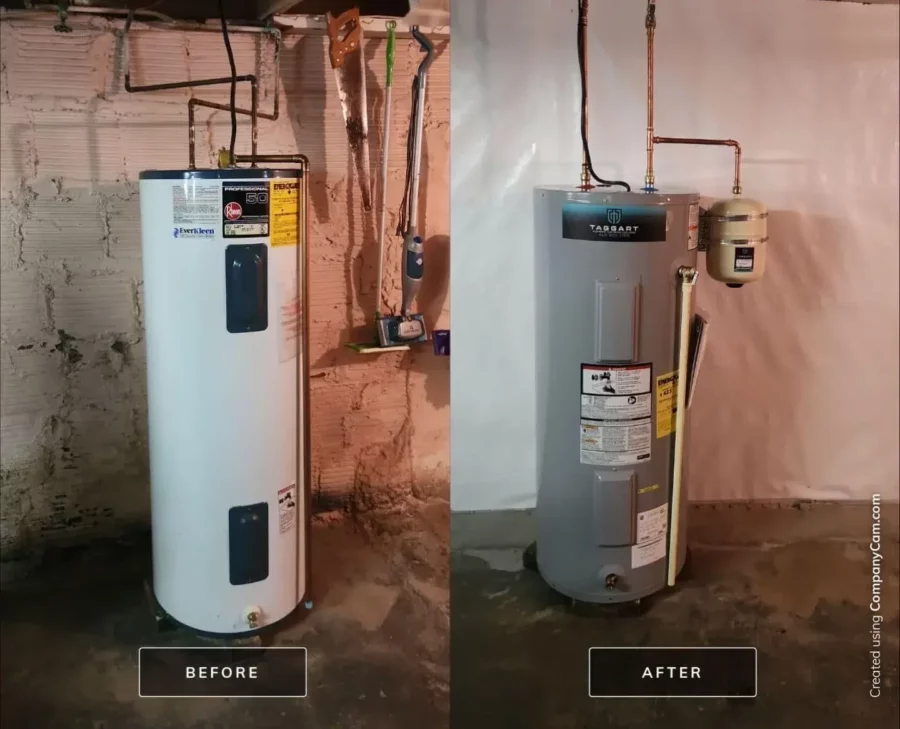
Water Heater Services in Pittsburgh, PA
Hot water when you need it most.
Taggart Plumbing provides water heater services in Pittsburgh, PA, including repairs, full replacements, annual maintenance and Navien tankless installations. Since 2016, our locally owned Pittsburgh plumbing company has worked on every type of residential water heater across the North Hills and greater Pittsburgh.
Every visit starts the same way: we roll out the quilt before we touch a thing. You get a clear diagnosis, honest options with upfront pricing and no high-pressure sales, so you can get back to the life you love.
Reach out to us when you need help with your water heater in Pittsburgh!

4.8 Stars | 1,428+ Google Reviews

Great guys very professional kept my house clean and they do great work to boot. I would very highly recommend giving them a call.

Called for several issues. New shower faucet, laundry tub install, toilet install, our water heater needed an expansion tank, and our water pressure was too high. Daniel took care of everything and we are very pleased. We will definitely be using them for our future projects.

Dan installed our powervent water heater with a nee expansion tank. The tech was very respectful of our home using drop cloths and leaving no mess at all. Couldn't be more pleased with the fast response and amazing install. Highly recommend them for any plumbing needs!
Read more
Good service, thought the price was high.

Chuck Center Township Very quick and helpful Friendly to talk to

My water heater stopped working. Chuck and Robert were able to come out the same day I called. They were so friendly, answered all my questions, and reviewed different options with me. They are able to fix the issue quickly and I highly recommend them.
Read moreOur Pittsburgh Water Heater Services

/upl
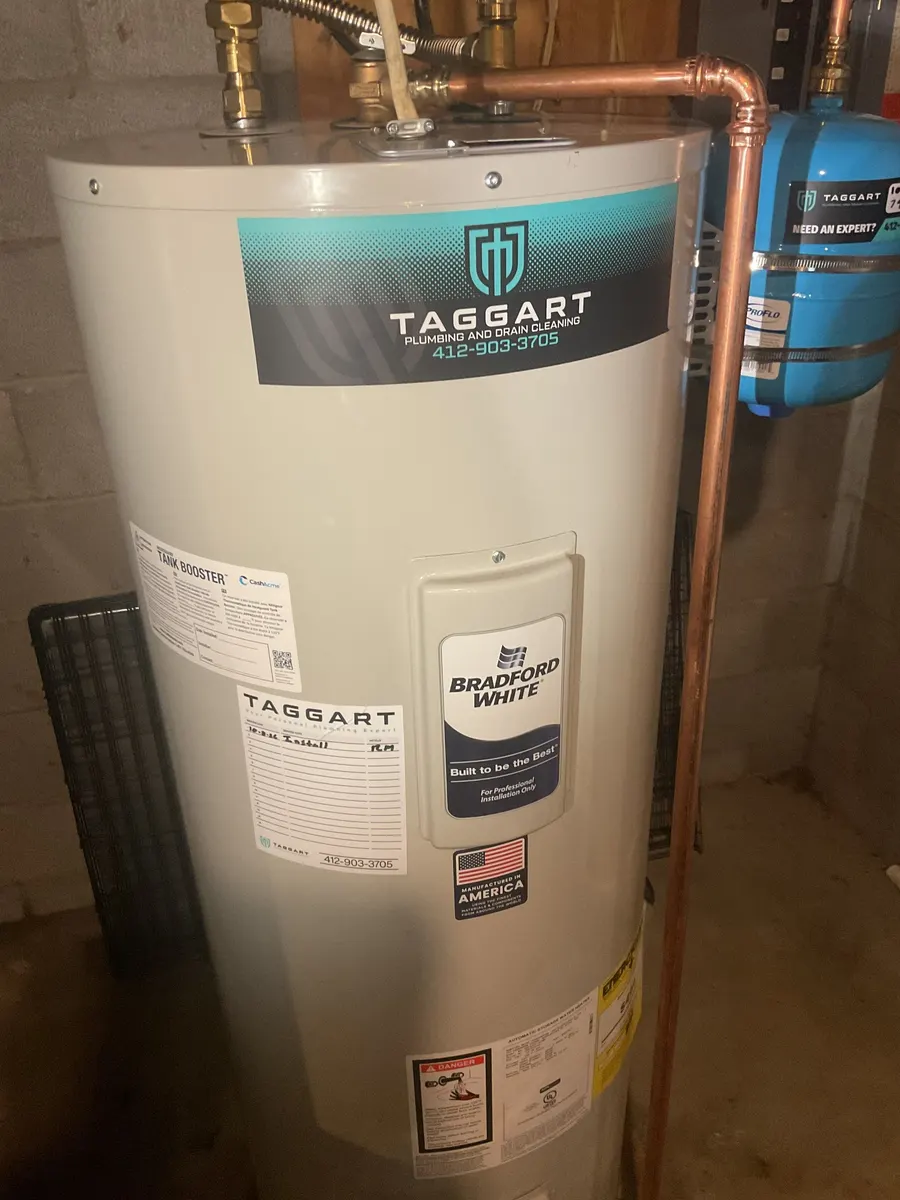
Types of Water Heaters We Service in Pittsburgh
Pittsburgh homes run on a wide mix of water heaters, from decades-old basement tanks (what most of us call the hot water tank) to high-efficiency tankless units.
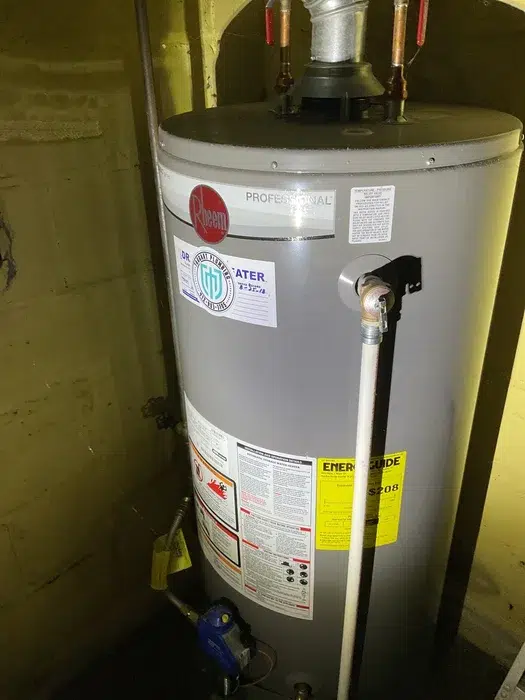
- Gas tank water heaters: The most common setup in Pittsburgh basements. Most vent through the home's chimney and last about 8 to 12 years.
- Power-vent gas water heaters: A fan pushes exhaust out through a side wall. This is often the fix when an older chimney can no longer vent a water heater safely.
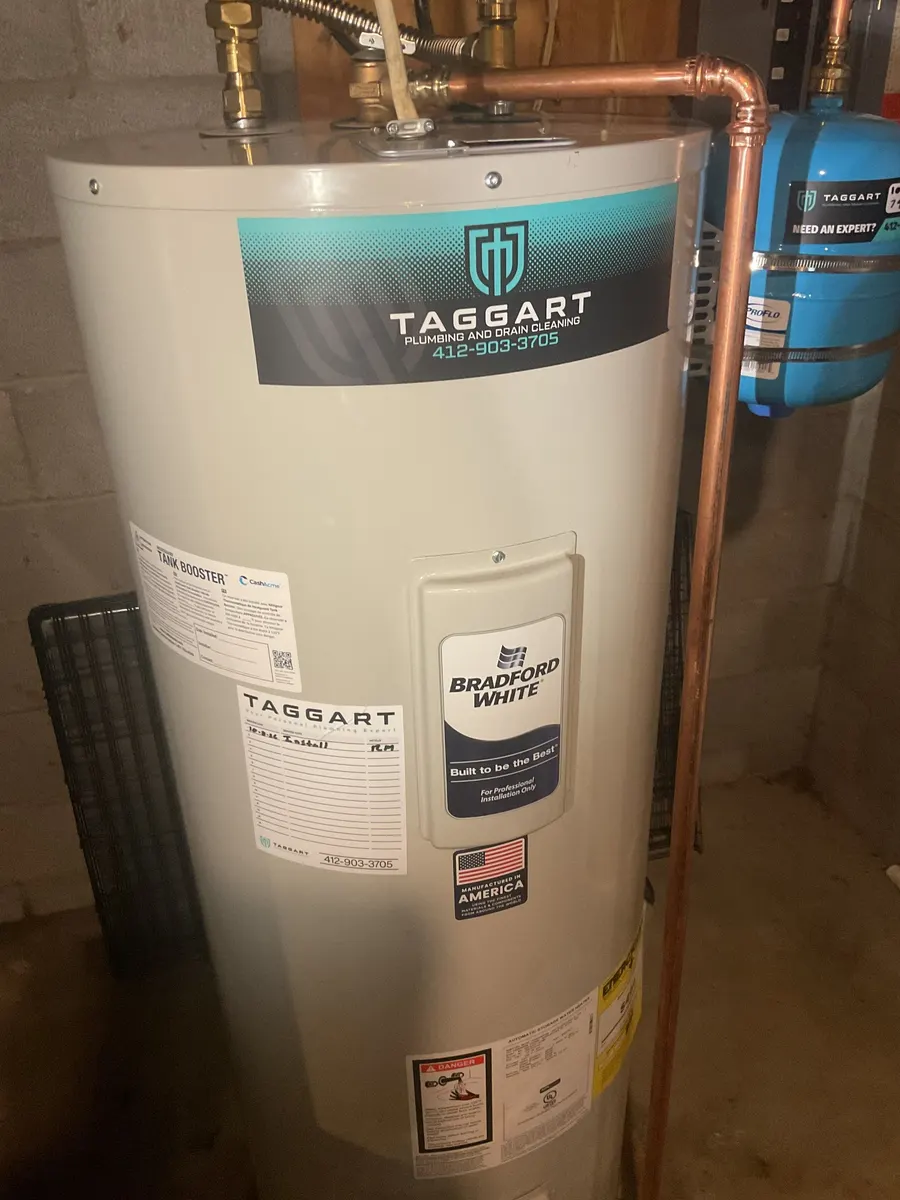
- Electric tank water heaters: No gas line or venting needed. This makes them a practical vent-free option for homes without a usable chimney.
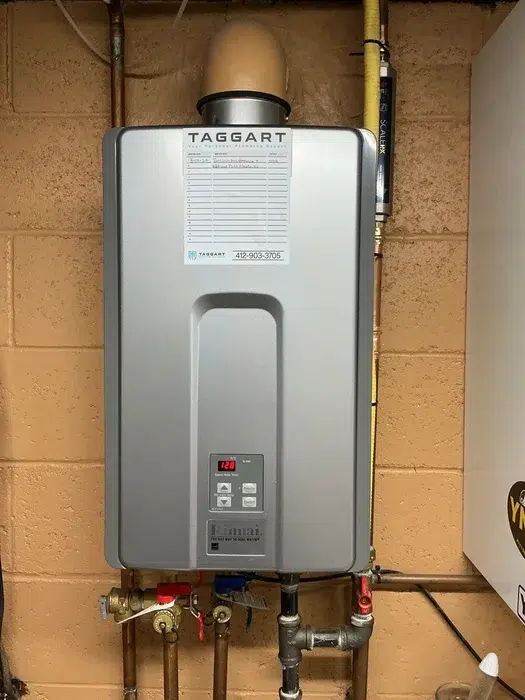
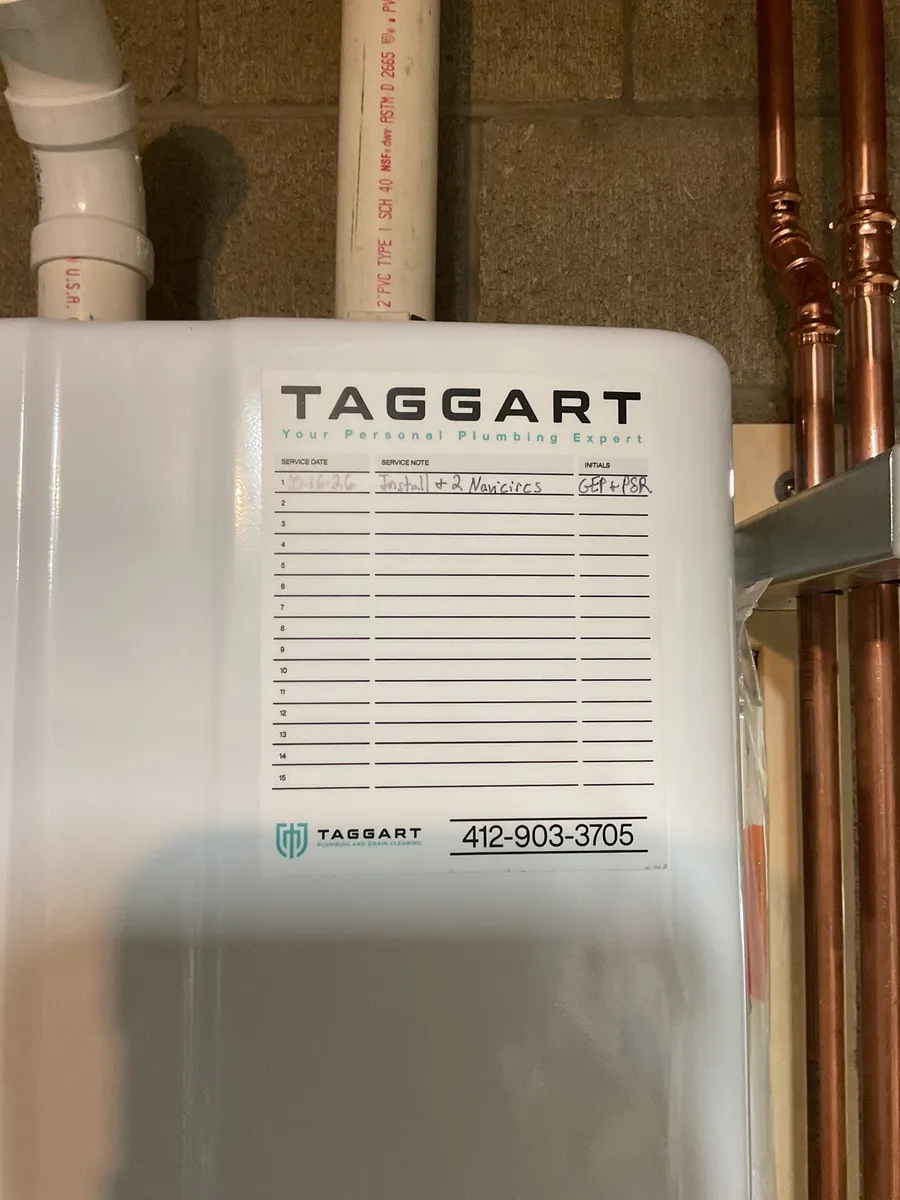
- Tankless (on-demand) water heaters: They heat water only as you use it, never run out mid-shower and can last about 20 years with annual descaling.
- Indirect water heaters: A storage tank heated by your home's boiler. These are common in older homes with hot-water heat.
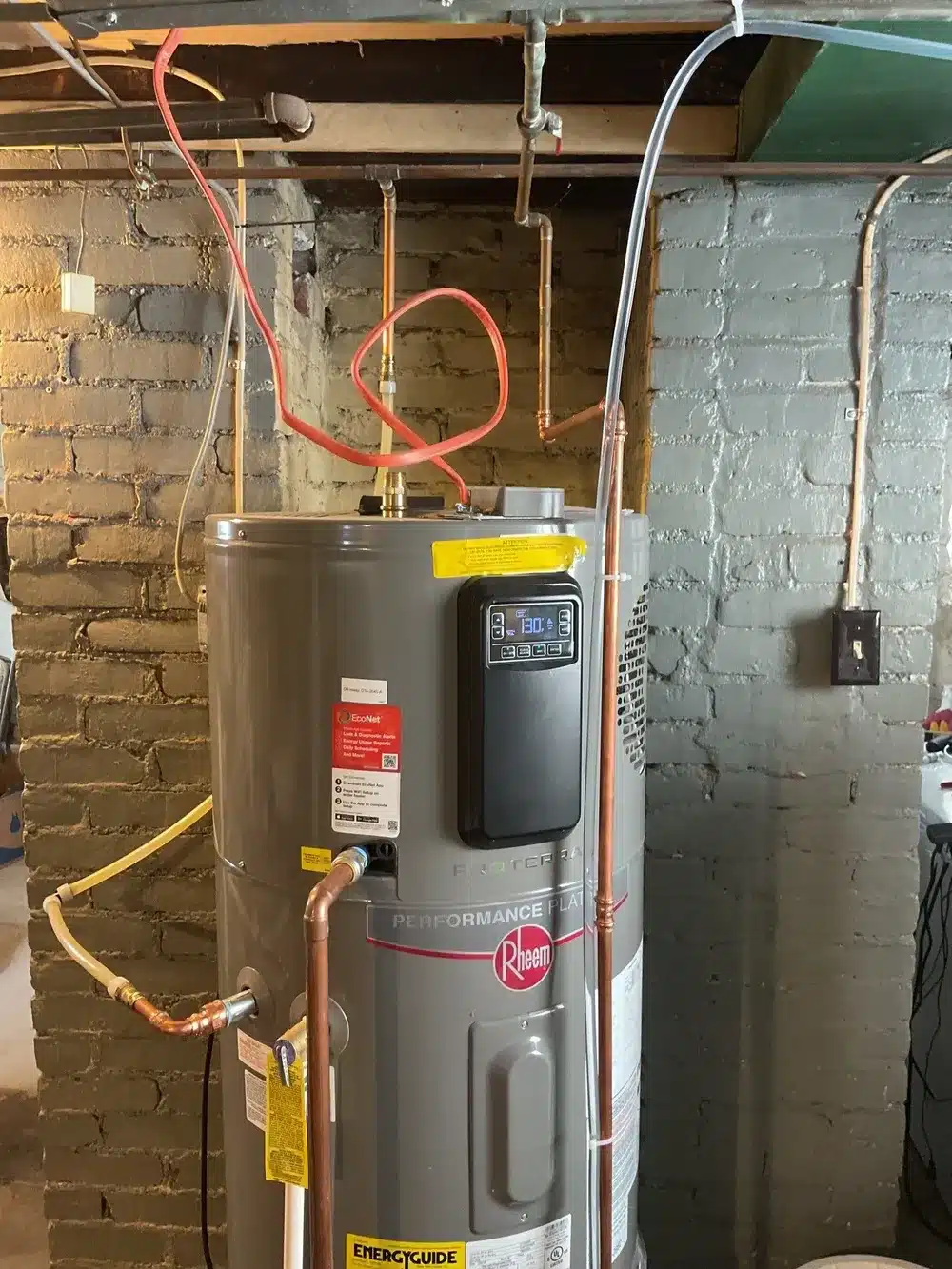
- Hybrid heat pump water heaters: High-efficiency electric units that pull heat from the surrounding air.
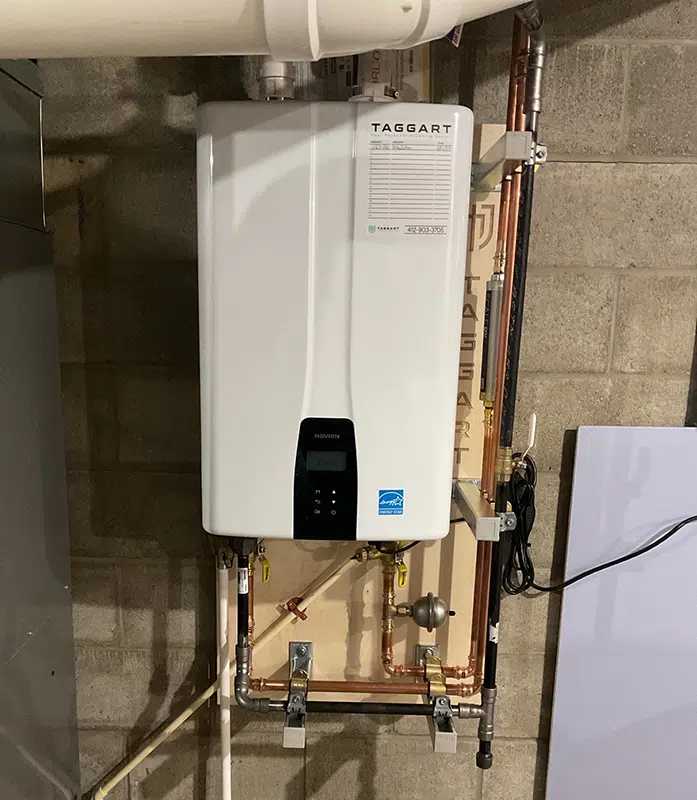
We stock and install State tank water heaters and Navien tankless systems, and we service most major brands. If you're weighing options, we'll walk through your household's hot water use, your fuel and venting setup and your budget to find the right fit.

Signs Your Pittsburgh Water Heater Needs Service
Water heaters in Pittsburgh, PA usually give warning signs before they fail completely. Call us if you notice any of these:
- No hot water, or hot water that runs out much faster than it used to
- Water that swings between hot and lukewarm in the middle of a shower
- Rumbling, popping or crackling sounds from the tank
- Rusty, brown or cloudy water coming only from the hot taps
- Water pooling under the tank or dripping from the relief valve's discharge pipe
- A tankless unit flashing an error code or shutting off mid-use
- A tank that's 10 or more years old (the manufacture date is on the label)
If there's water on the floor, turn off the water heater's cold supply valve and its gas or power, then give us a call. One of our Pittsburgh water heater pros will tell you whether you're looking at a simple repair, overdue maintenance or a replacement.
Common Water Heater Problems in Pittsburgh Homes
Pittsburgh has the second-oldest housing stock in the country. Older basements, original chimneys and decades of add-ons shape how water heaters perform here, and moderately hard water and cold winters add wear. These are the Pittsburgh water heater problems we see most often across the area:
- Orphaned chimney venting: When an older furnace is replaced with a high-efficiency model that vents out the side of the house, the gas water heater is often left alone in an oversized masonry chimney. That can cause weak draft and condensation. A chimney liner or a switch to a side-wall power-vent unit fixes it.
- Sediment and scale: Moderately hard water leaves mineral deposits in the bottom of tanks and inside tankless heat exchangers. That causes rumbling, lost capacity and shorter equipment life.
- Tight basement clearances: Low ceilings in older homes can make it hard to pull and replace an anode rod. In those cases we use segmented anode rods built for low-clearance installs.
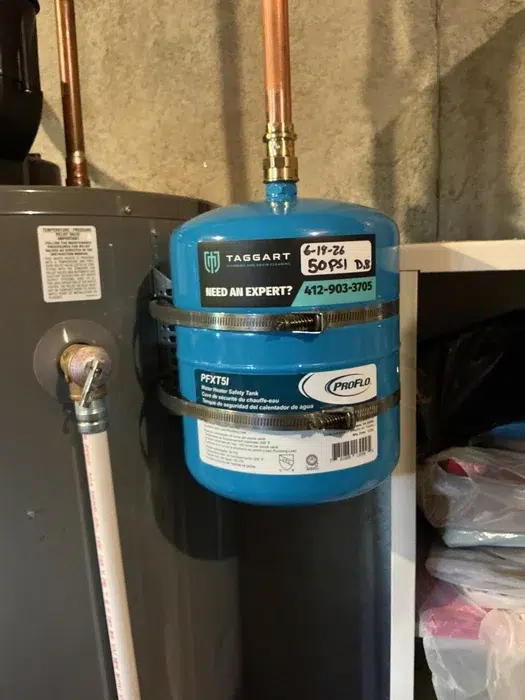
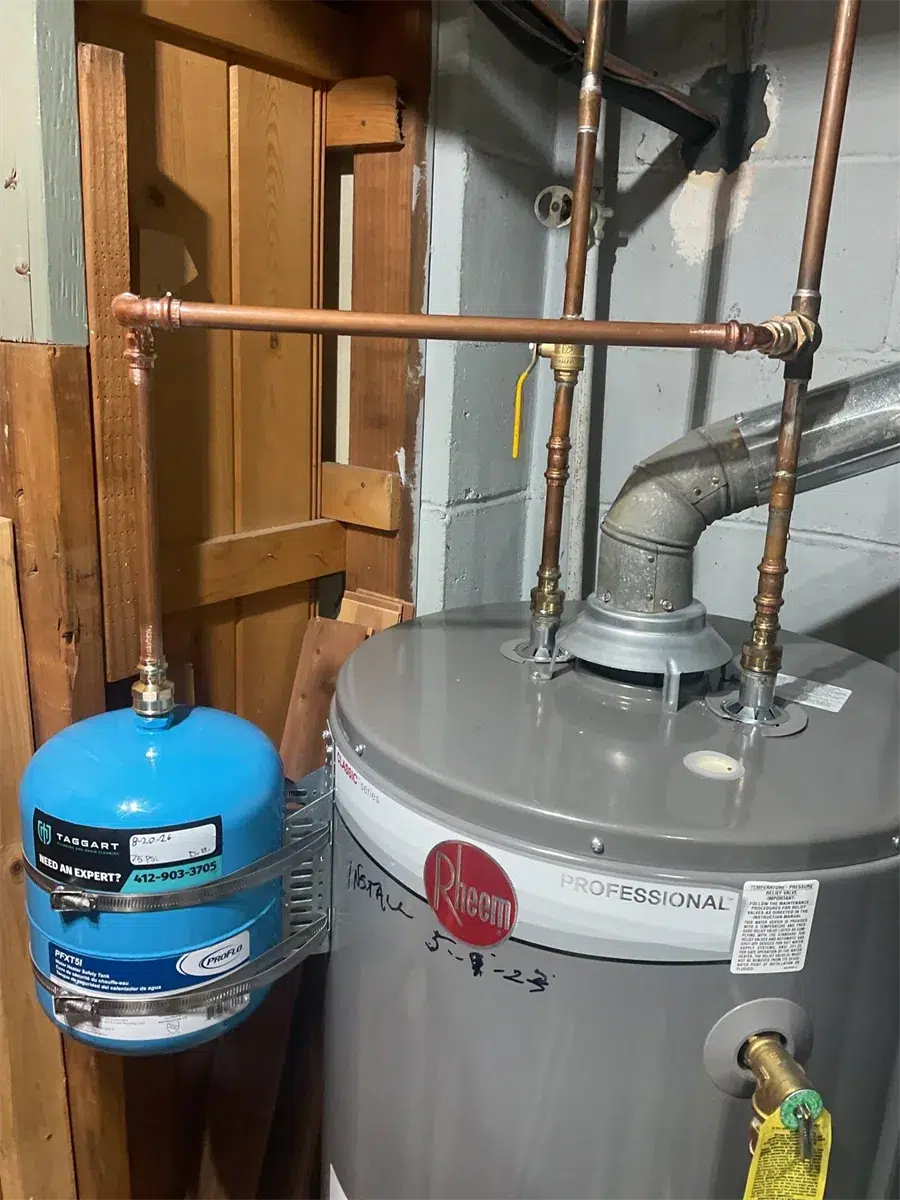
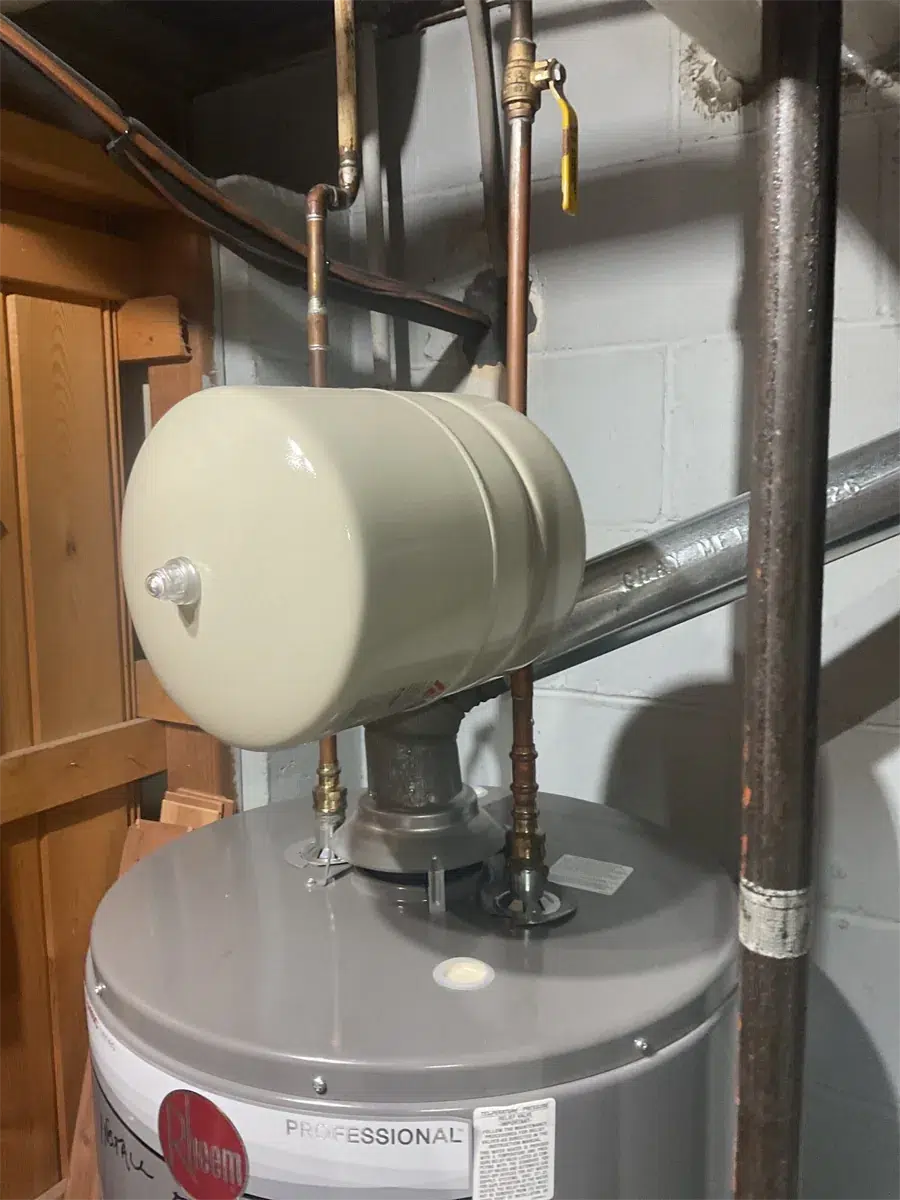
- Thermal expansion: Homes with a pressure-reducing valve or check valve have nowhere for heated water to expand. Without an expansion tank, that pressure strains the tank and makes the relief valve drip.
- Winter demand: Incoming water is much colder in January than in July. A tank that was already undersized or aging usually shows it first in winter.
Most of these have a straightforward fix, and many are covered by the add-ons below. Annual maintenance catches the rest before they turn into a failure.
Water Heater Upgrades & Add-Ons
Not every hot water problem calls for a new water heater. These add-ons help you get more hot water, more years and more protection from the unit you already have, or from a new one. Here's what we offer:
- Leak and water damage protection: Water heater safety pans (24" or 26"), automatic leak shut-off systems and full-port drain valve upgrades
- Tank life and corrosion protection: Double anode rod upgrade (10-year warranty extension), zinc, segmented, hot-side segmented and powered anode rods, scale prevention systems, and an extended tank warranty (8-year warranty extension)
- Pressure and venting solutions: Thermal expansion tanks (ST-5 and ST-12), chimney liner installation, side-wall power-vent gas water heaters, side-wall vented tankless water heaters, vent-free electric water heaters, and high-efficiency electric replacements as an alternative to an oversized tank
- Comfort and convenience: Instant hot water recirculation systems, tankless recirculation systems and tankless Wi-Fi monitoring and control
Not sure which upgrade fits your situation? Our guide, Which Water Heater Upgrades Are Right For You?, walks through the most common hot water complaints and the fix for each.
Why Hire a Licensed Plumber for Water Heater Work in Pittsburgh
In Allegheny County, water heater work is regulated by the Allegheny County Health Department (ACHD) Plumbing Program. Replacing a water heater requires a plumbing permit and a final inspection. Only a licensed master plumber, or a journeyman or apprentice working under one, can install it for you. Homeowners can pull their own permit only for a home they live in, and only if they buy all the materials and do all the labor themselves.
A properly licensed installation covers the safety details that DIY jobs and unlicensed installers often miss:
- Pulling the ACHD permit and scheduling the required inspection
- Sizing and connecting the gas line, and confirming safe venting with a draft check
- Installing the temperature and pressure (T&P) relief valve with correct discharge piping
- Adding an expansion tank where your plumbing requires one
- Testing for gas and water leaks before the job is signed off
Taggart Plumbing is licensed by the Allegheny County Health Department, so your installation is done to code and inspected. If you're still tempted to do it yourself, read DIY Water Heater Installs: What Could Possibly Go Wrong? first.
What to Expect: The Clean By Design Protocol on Every Pittsburgh Water Heater Call
Every water heater visit follows the Clean By Design Protocol™. It's our company-wide standard for protecting your home, and our plumbers are trained and held accountable to it on every job. Here's how a typical visit goes:
Our phones are answered around the clock, so you'll talk to a real person and get on the schedule.
Before any tools come out, we lay down the quilt, add non-slip runners where we'll walk and put on fresh booties.
We check the unit's age and condition, venting and draft, relief valve, anode rod and sediment, or the error code history on a tankless unit.
We explain what we found, lay out your repair or replacement options and give you the price before any work starts. There are no high-pressure sales.
We keep a shop vac running, set tools only on protected surfaces and work from our own folding table instead of your floor.
We test temperatures, draft and connections, do a final vacuum and wipe-down, and offer a walkthrough of everything we touched.
When we leave, your home looks like we were never there, except now you have hot water.
The Defender Package Plan Has Your Back
Our Defender Package Plan is the easiest way to keep your plumbing in check year-round. Stay ahead of breakdowns, save on services, and enjoy a little peace of mind.
Water Heater Service Across Pittsburgh's North Hills
Our plumbers are based at 1409 Duncan Ave, Suite 205, in Pittsburgh's North Hills, minutes from these communities:
- Ross Township (including McKnight): Our home base, full of mid-century homes with gas tanks in the basement that are reaching replacement age
- Bellevue: Early-1900s borough homes, where gas water heaters often still vent through the original chimney
- West View: Older homes with tight basements, where low-clearance anode rods and compact replacements come in handy
- Shaler Township: Post-war neighborhoods where expansion tanks and venting updates come up often
- McCandless: Family homes where hot water demand has outgrown the original tank
- Hampton Township: Larger homes that are strong candidates for tankless and recirculation upgrades
- Franklin Park: Newer, spacious homes where Navien tankless systems are a popular choice
Wherever you are in the North Hills, book online or give us a call to get your hot water back.
Outside the city? See our water heater services in Allison Park and Cranberry Township.
Water Heater Costs & Financing in Pittsburgh
What you'll pay depends on whether you need a repair or a new system, and on how your home is set up. These are the factors that affect the price most:
- Repair or replacement: A thermostat, element or valve repair costs far less than a full replacement.
- Fuel type and venting: Gas, electric or tankless, plus whether your chimney needs a liner or a switch to power venting
- Size and capacity: Tank size for your household, or flow-rate sizing and gas line capacity for a tankless unit
- Code requirements: Permit fees, expansion tanks and relief valve discharge piping
- Access: Tight basements, low ceilings or narrow stairways
You'll get an exact price before we start, with no surprise charges. For larger projects, we offer financing through GoodLeap, which uses a soft credit check to see if you qualify. You can also check our current offers, or join the Defender Package Plan for 10% off every job and no dispatch fees.
Why Choose Taggart Plumbing for Water Heater Services in Pittsburgh
Taggart Plumbing has repaired, replaced and maintained water heaters for Pittsburgh homeowners since 2016, working from our office on Duncan Avenue in Ross Township. Our plumbers are licensed by the Allegheny County Health Department and certified through the Navien Service Specialist program, so both tank and tankless systems get manufacturer-level care. We’re also a registered Pennsylvania Home Improvement Contractor (#PA126149).
Every call follows the Clean By Design Protocol™, our company-wide standard for floor protection, dust containment and a final exit audit. Named a Nextdoor Neighborhood Fave in 2025, we back that up with honest recommendations instead of upsells, State and Navien equipment, and annual maintenance plans for both tank and tankless units.

Get Back to the Life You Love With Reliable Hot Water
A cold shower shouldn't take over your week. Whether your water heater in Pittsburgh just quit, is showing its age or you're ready for endless hot water from a tankless system, Taggart Plumbing will diagnose it, give you honest options and leave your home exactly as clean as we found it.
Book online or give us a call to schedule water heater service in Pittsburgh!
Pittsburgh Water Heater FAQ's
Most tank water heaters last about 8 to 12 years. The U.S. Department of Energy estimates 10 to 15 years under ideal conditions. Tankless water heaters typically last about 20 years when they're descaled every year. Hard water, skipped maintenance and high demand can all shorten those numbers, which is why we recommend annual service for both types.
A good rule of thumb is to replace a tank water heater if it's 10 or more years old, needs repairs more and more often, or the repair would cost more than half the price of a new unit. If your water heater is younger and the problem is a single part, like a thermostat, element or valve, repair is usually the better value. Our plumbers will give you an honest assessment of both options.
For many households, yes. Tankless water heaters provide endless hot water, save floor space and last roughly twice as long as a tank. Because incoming water gets very cold in Pittsburgh winters, the unit has to be sized for your peak flow rate, and your gas line has to be able to supply it. We evaluate both before recommending a Navien tankless system. Large households with high demand sometimes do better with an indirect or high-recovery tank model.
We recommend 120°F for most homes. It's hot enough to reach every fixture, it reduces the risk of scalding, and it slows mineral buildup in the tank. Higher settings waste energy and can be dangerous for young children and older adults.
Yes. The Allegheny County Health Department requires a plumbing permit and a final inspection for water heater replacements. Homeowners can pull their own permit only for a home they live in, and only if they buy all the materials and do all the work themselves. When Taggart Plumbing installs your water heater, we take care of the permit.
Turn off the power at the breaker (electric) or set the gas valve to "off" (gas). Then close the cold water supply valve on the inlet pipe and use towels or buckets to contain the water. Call us next. A leak can be something as simple as a loose connection or as serious as a failing tank, and our plumbers will find the cause before it damages your home.
It's extremely rare, but it can happen when safety components fail. Modern water heaters have a temperature and pressure (T&P) relief valve that releases excess pressure, and we test it during every maintenance visit. Warning signs include popping sounds, a leaking relief valve or a visibly bulging tank. Never cap or bypass a relief valve.
First, make sure the tank is full by opening a hot water tap until water flows steadily. For an electric model, flip its dedicated breaker on. For a gas model, turn the gas valve to "pilot," press and hold the pilot button while lighting the pilot, then turn the valve to your desired temperature. If you're not comfortable doing this, we'll handle it safely.
Recent Projects
4.8 Stars | 1,428+ Google Reviews from the North Hills and Surrounding Areas
Still Not Convinced?
Let us show you how we’re the right team for the job.
Great guys very professional kept my house clean and they do great work to boot. I would very highly recommend giving them a call.
Called for several issues. New shower faucet, laundry tub install, toilet install, our water heater needed an expansion tank, and our water pressure was too high. Daniel took care of everything and we are very pleased. We will definitely be using them for our future projects.
Dan installed our powervent water heater with a nee expansion tank. The tech was very respectful of our home using drop cloths and leaving no mess at all. Couldn't be more pleased with the fast response and amazing install. Highly recommend them for any plumbing needs!
Read moreGood service, thought the price was high.
Chuck Center Township Very quick and helpful Friendly to talk to
My water heater stopped working. Chuck and Robert were able to come out the same day I called. They were so friendly, answered all my questions, and reviewed different options with me. They are able to fix the issue quickly and I highly recommend them.
Read more